
Where the time goes
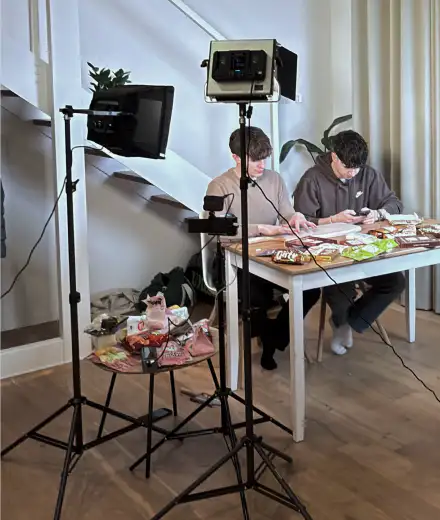
The installers we interviewed weren’t short of work. They were short of time. Every quote meant building it by hand, then calling the branch to price it.
One quote engine, two front doors
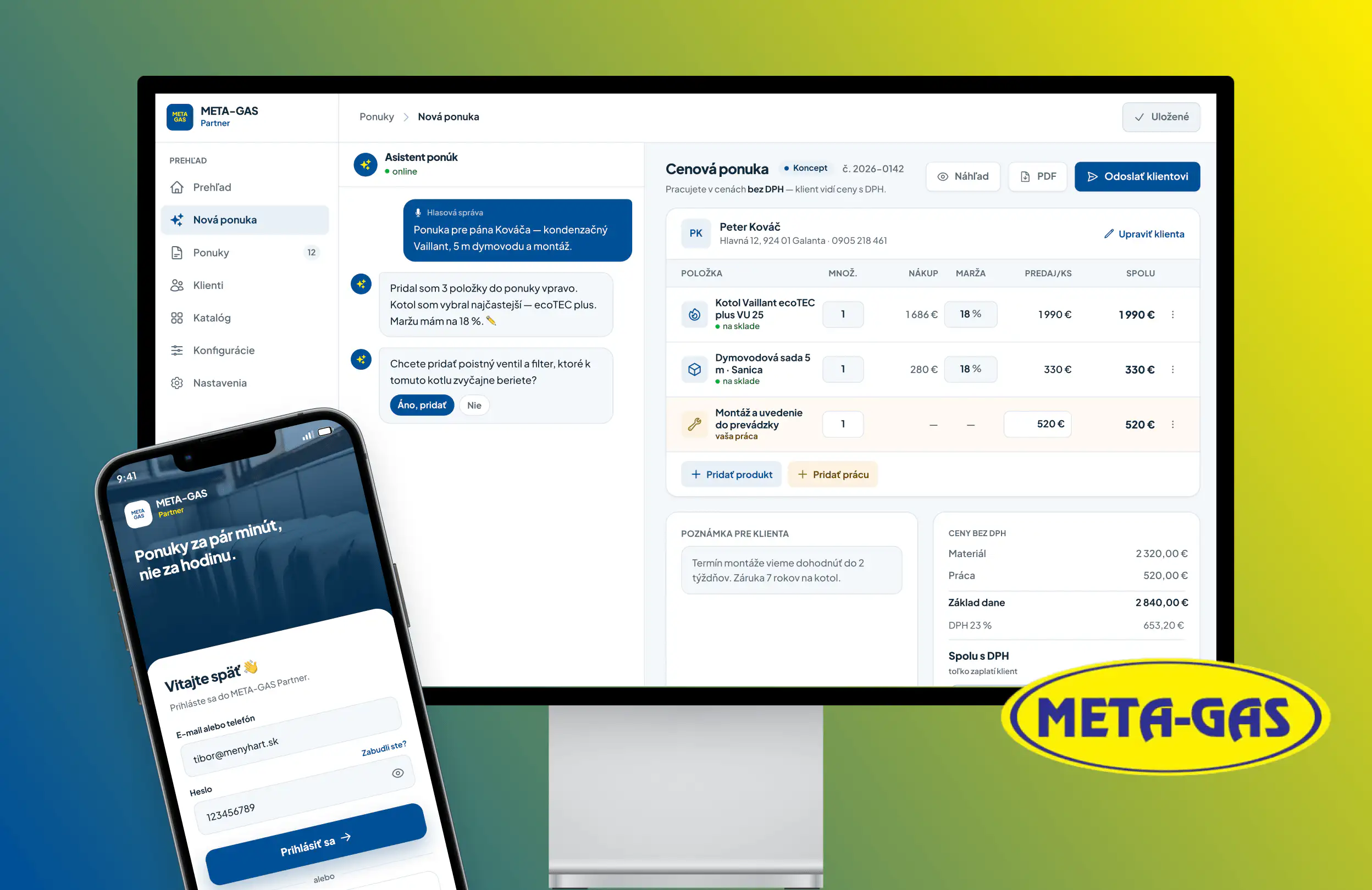
The same builder runs on both screens. On the phone, the installer speaks the job and gets a draft quote back. On the desktop, they build it line by line.
Designing META-GAS Partner
META-GAS supplies heating installers across Slovakia. Thirteen branches, more than forty thousand products, the exclusive local distributor for brands like Sanica and Henco. They didn’t come to us for another e-shop; they’d been down that road and knew the problem was never the design. They wanted to know what would genuinely make their installers’ lives easier. So we started with research.
Over several weeks we interviewed installers one by one and ran a phone survey that reached hundreds more. We looked at how they actually work and where the day breaks down. The same answer kept coming back. Quotes were the bottleneck, not leads. Stock that showed as available often wasn’t. And the people doing this work were mostly in their fifties, comfortable on the phone and wary of anything that felt like it wanted to replace them.
We turned those findings into a decision. In a short strategy document we laid out two ways forward: a focused tool that just made the installer’s day easier, or a wider platform that also put verified installers in front of homeowners. Each had a real case, and we recommended one, with the reasons laid out. META-GAS chose the focused tool. It played to their genuine advantage, a distribution network that puts every part of a job in one place, and it asked the least of a user who didn’t want to change how they work.
Then we designed the product, end to end. We began with the framework and mapped every user flow: onboarding, first login, building and sending a quote, reordering, each individual path an installer takes through the app. Then the screens. A two-pane desktop workspace where the quote takes shape as you build it. A phone assistant we framed as the digital version of calling the branch, so it felt like help rather than a robot. Configuration memory that learns the parts an installer usually fits with a given boiler and pre-fills them next time. A private earnings line the customer never sees on the PDF. VAT handled correctly for a registered payer and a non-payer alike. All of it sat on a calm, legible design system built for a fifty-year-old reading a phone in a boiler room, not a designer’s monitor. We delivered close to eighty screens as a prototype the team could click through from login to sent quote.
The research is done, the direction is agreed, and the product is drawn down to the VAT line and tested against the people who’ll use it.